
Plot Method for bbnp_regression Objects
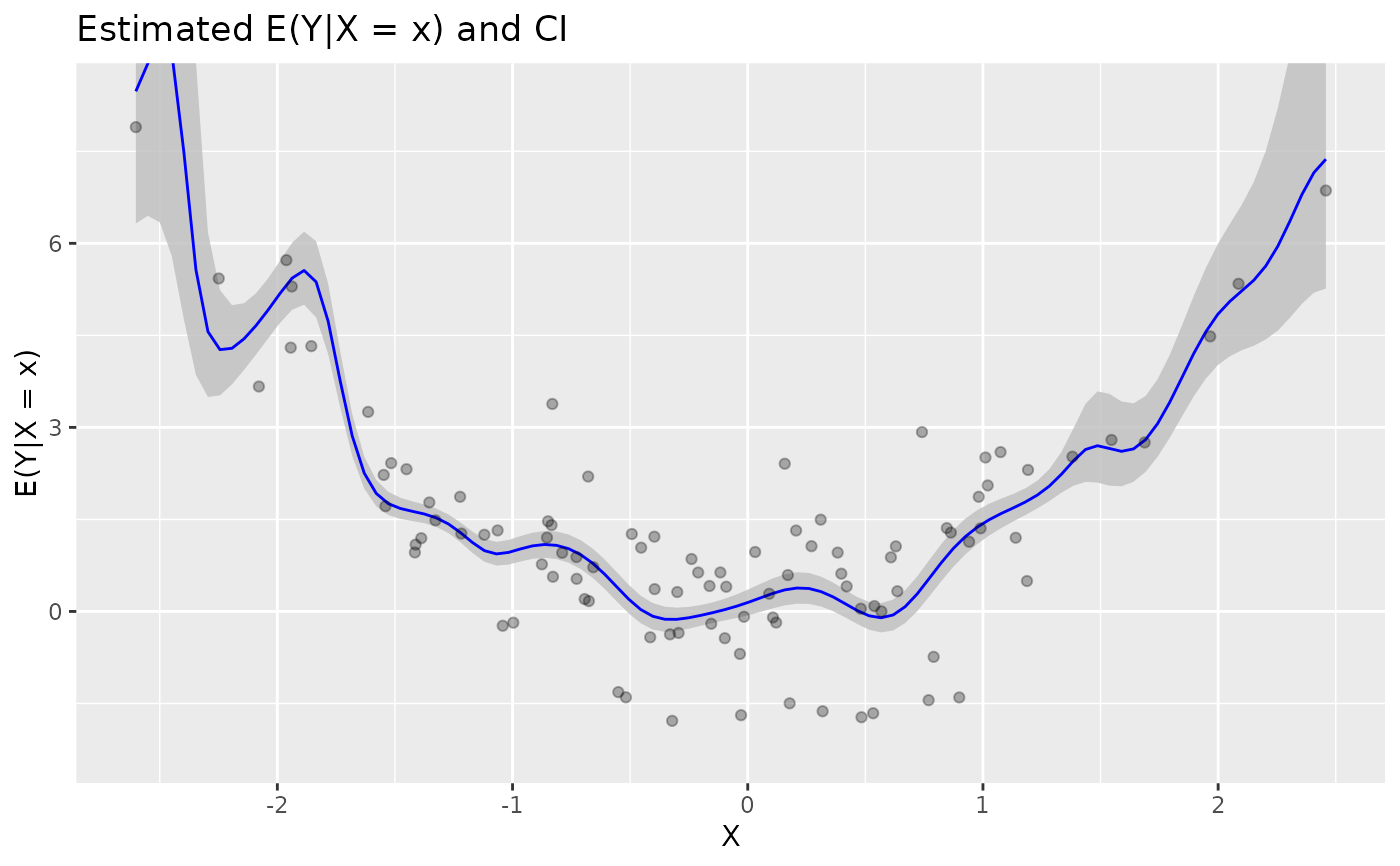
plot.bbnp_regression.RdCreates visualizations of bias-bounded conditional expectation estimation results
Arguments
- x
An object of class bbnp_regression
- type
Character string specifying plot type. Options are:
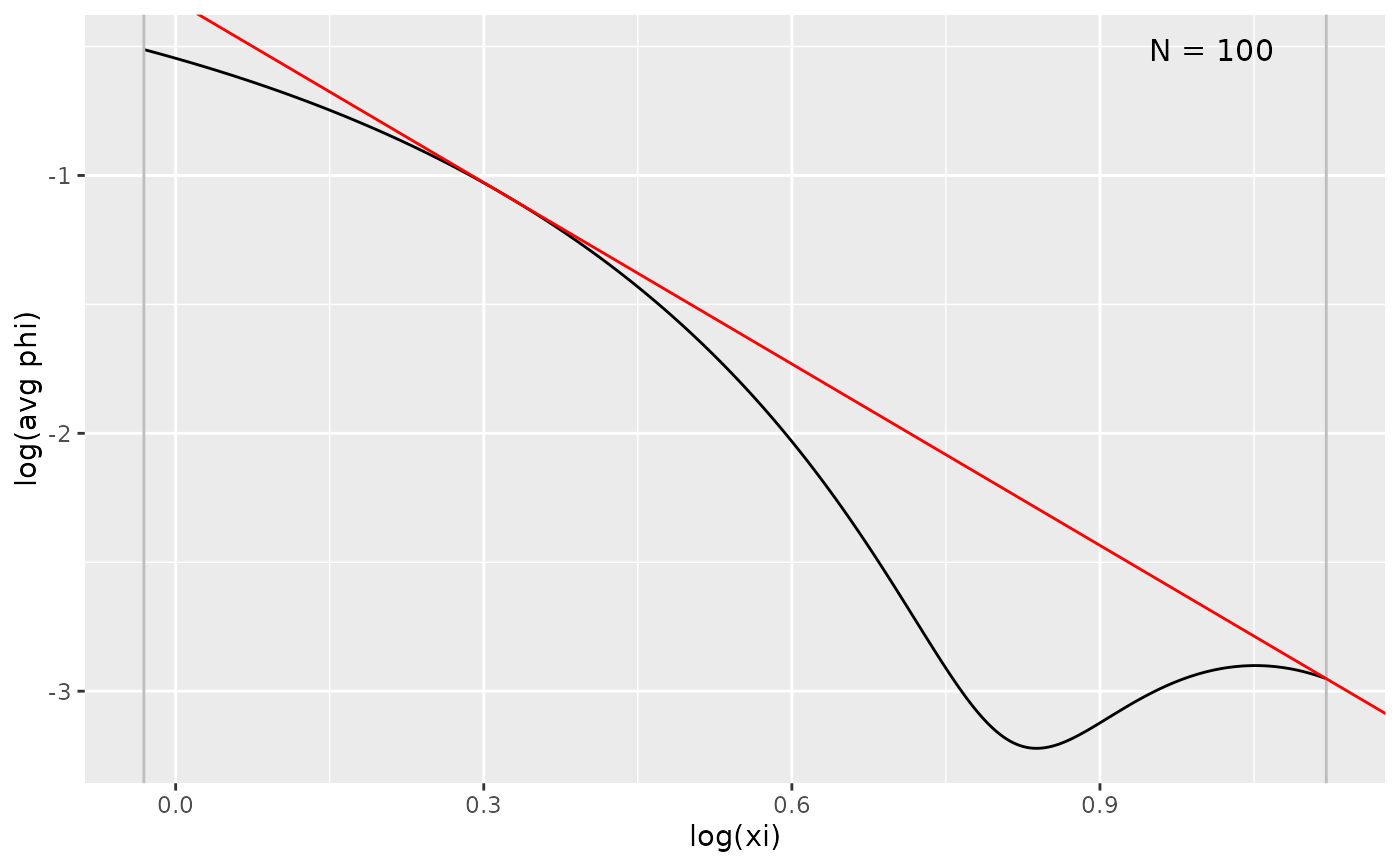
"regression"(default): Conditional expectation with confidence interval"ft": Fourier transform plot with estimated envelope
- fill_ci
Color for confidence interval ribbon (default: a muted blue).
- alpha_ci
Transparency for confidence interval ribbon (default: 0.35)
- point_alpha
Transparency for data points (default: 0.28)
- point_color
Color for data points (default: a soft grey).
- ft_resol
Resolution for Fourier transform plot (default: 500)
- xi_range
Optional numeric
c(lower, upper)giving the frequency range to display in the"ft"plot. IfNULL(default) a wide range around the selected window is shown (seeexpand). This controls only what is drawn; it does not change the fitting window[xi_lb, xi_ub].- expand
For the
"ft"plot whenxi_rangeisNULL: how far past the selected window to display, as a multiple (default 2.5).- ...
Additional arguments (unused)
Examples
# \donttest{
set.seed(1)
x_data <- runif(500) + runif(500)
y_data <- 2 * x_data - x_data^2 + rnorm(length(x_data), sd = 0.3)
fit <- bias_bound_regression(x_data, y_data, bw = 0.1)
#> Warning: Fitted envelope slope r-hat = 1.84 is below the smoothness floor r >= 2 the method assumes: the Fourier transform does not show a clear power-law decay over the window (likely a supersmooth density or a non-power-law/non-monotone cross-spectrum). The returned envelope dominates the fitted frequency grid, but Schennach's coverage theorem may not apply. Inspect plot(fit, type = "ft").
plot(fit)
 plot(fit, type = "ft")
 # }
# }